Skip to content
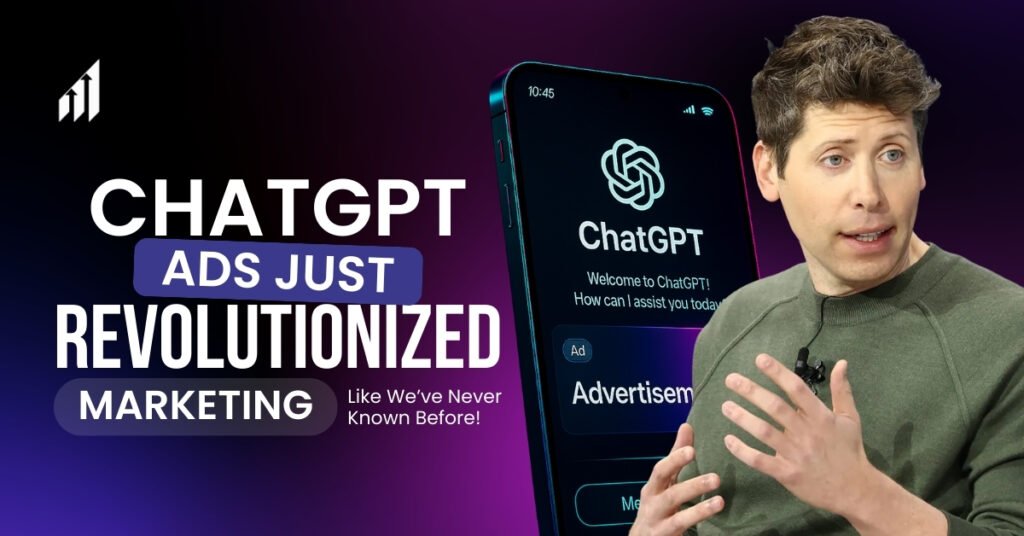
The playbook that defined digital advertising for two decades is being rewritten. For years, small business owners have navigated the same familiar terrain: master Google Ads, crack the Facebook Ads algorithm, and optimize relentlessly for clicks. That era is ending. OpenAI’s launch of ChatGPT ads isn’t just another platform competing for marketing dollars, it’s a fundamental reimagining of how brands and consumers connect.
With over 800 million weekly active users, ChatGPT commands one of the largest and most engaged audiences on the planet. For small businesses drowning in rising ad costs and platform complexity, this shift represents both a challenge and an unprecedented opportunity. But success won’t come from recycling old tactics. ChatGPT advertising introduces an entirely new category called “Conversational Advertising,” demanding fresh approaches to strategy, content creation, and value measurement. The businesses that adapt first won’t just survive, they’ll dominate.
Highlight:
- Conversational advertising era begins
- ChatGPT reshapes customer journeys
- AEO replaces traditional SEO
- Authority beats ad spend
- AI-driven purchase decisions
- Small businesses gain advantage
The ChatGPT Ads Revolution: What’s Actually Changing?
On January 16, 2026, OpenAI announced it would begin testing advertisements for users on Free and Go subscription tiers across the United States. ChatGPT ads will appear at the conclusion of conversations, contextually matched to user queries. Ask for laptop recommendations, and you might see an ad for exactly the device you need, seamlessly integrated into the conversation flow.
OpenAI built this platform on five principles: mission alignment, answer independence, conversation privacy, user control, and long-term value. Most critically, advertising will never influence ChatGPT’s organic responses, and user data will never be sold to advertisers, directly addressing privacy concerns plaguing traditional digital advertising.
CEO Sam Altman previously resisted advertising, but financial realities shifted his position. Building large language models demands enormous resources, and advertising emerged as the only viable path to keep AI accessible globally.
Why This Isn’t Just Another Ad Channel
ChatGPT advertising signals a fundamental shift in digital marketing mechanics. Traditional advertising has centered on SEO and keyword bidding strategies. Conversational AI demands an entirely different approach: Answer Engine Optimization (AEO) and Generative Engine Optimization (GEO).
AEO focuses on crafting the most precise, helpful responses to user questions. GEO emphasizes creating authoritative content that AI systems can confidently reference. ChatGPT ads operate at the intersection of these two disciplines, introducing a commercial layer to a system built on trust, relevance, and helpfulness.
Enter Conversational Commerce
This paradigm shift transforms advertising from interruption to integration. OpenAI envisions a future where users can query advertisements directly, comparing product options and making purchase decisions without ever leaving the chat interface. If this vision materializes, traditional landing pages may become relics of the marketing past, dramatically reshaping the customer journey.
For AI-driven marketing strategies, particularly among smaller firms, the implications are staggering. The old advantages of massive marketing budgets matter less when success depends on relevance and credibility rather than reach and frequency.
The Small Business Blueprint for ChatGPT Advertising
Smaller marketing budgets become less of a handicap in conversational advertising. Clear, relevant, credible messaging matters more than sheer spending power. Here’s how small businesses can prepare for the ChatGPT ads era:
1. Build Industry Authority Before Spending a Dollar
Quality content must precede advertising investment. ChatGPT prioritizes authoritative sources, comprehensive guides, original research, detailed case studies, that demonstrate genuine expertise. By establishing authority in AI’s reasoning layer first, advertising reinforces existing credibility rather than attempting to manufacture it from scratch.
This foundation work isn’t optional. It’s the difference between ads that convert and ads that get ignored.
2. Master Conversational Marketing Fundamentals
Traditional advertising relies on catchy slogans. Conversational ads require dialogue-based approaches. Businesses must map actual customer questions, common objections, and comparison criteria. This research forms the foundation of a conversational knowledge base that guides rather than promotes.
The goal shifts from driving clicks to supporting purchase decisions. It’s a subtle but crucial distinction that separates effective conversational advertising from traditional tactics wearing new clothes.
3. Reimagine the Entire Customer Journey
The classic marketing funnel, awareness, consideration, decision, conversion, is compressing dramatically. In ChatGPT advertising, discovery, evaluation, and decision-making can collapse into a single conversational experience.
Just as businesses optimized websites to surface critical information quickly, they’ll need to structure AI-accessible assets the same way. Product catalogs, support documentation, and verification tools should integrate directly into the chat environment. Reducing friction by delivering what customers need instantly creates competitive advantage.
4. Adopt New ROI Measurement Frameworks
Last-click attribution won’t capture ChatGPT advertising’s true value. Conversions matter, but so do conversational influence, brand mention frequency, and lead quality metrics that traditional attribution models ignore.
Modern small businesses need to evaluate AI marketing ROI through efficiency gains, friction reduction, and experience improvements. These signals reveal AI’s actual long-term value, even when direct revenue attribution remains murky.
The Conversational Future Is Here
ChatGPT ads represent the beginning of a long-term evolution, not a one-time platform launch. Digital marketing is transforming into a relationship-based discipline built on relevance and credibility rather than reach and repetition.
Large enterprises may struggle to pivot quickly, constrained by bureaucracy and legacy systems. Small businesses can move faster, adopting AEO and GEO principles without requiring committee approval. This agility creates opportunity for smaller players to establish visibility within the decision-making platforms consumers will rely on for years to come.
The transformation has begun. The only question is whether you’ll capitalize on this shift before your competitors do, or spend the next decade playing catch-up in a conversational world you didn’t prepare for.