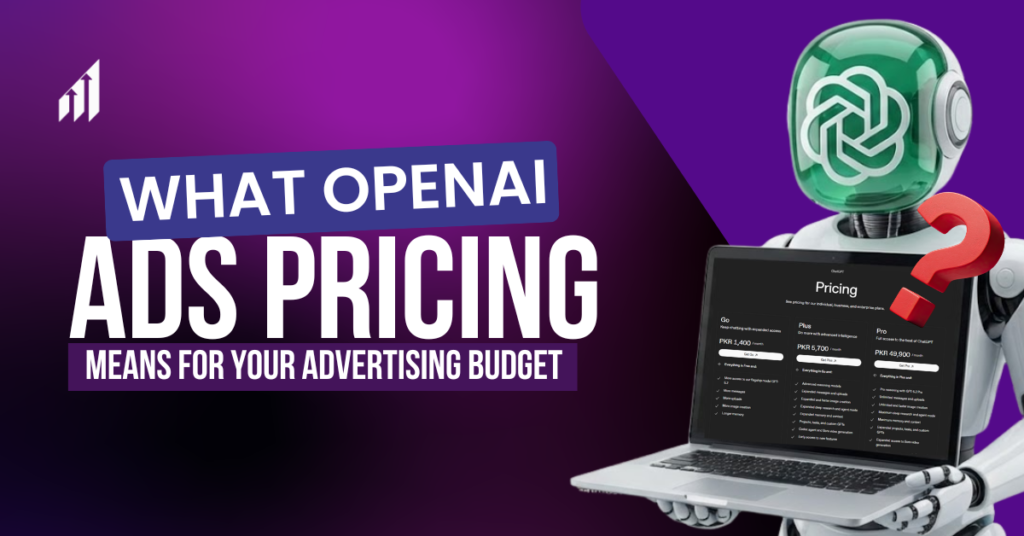
OpenAI just rolled out advertising inside ChatGPT, and the numbers are staggering. Reports place OpenAI ads pricing near $60 per 1,000 impressions. That’s triple typical Meta campaign costs. For brands eyeing ChatGPT premium ads, this steep entry point demands careful evaluation.
High costs aren’t the sole issue. Advertisers receive minimal performance data. No conversion tracking exists. Purchase insights remain unavailable. You get basic metrics like impressions and clicks only. This forces marketers into tough decisions about whether AI ads warrant premium investment.
DigiEvolve assists companies in evaluating emerging ad platforms like ChatGPT premium ads. We examine if novel channels produce returns before budgets get wasted. Grasping what your investment buys becomes critical before committing funds.
Highlights:
- ChatGPT ads cost $60 CPM
- Triple cost versus Meta ads
- Minimal performance data available
- No conversion tracking support
- Premium native ad placements
- Best for awareness campaigns
ChatGPT Premium Ads Cost Analysis
Industry sources indicate roughly $60 CPM rates. CPM represents cost per thousand views. Stacking this against competitors shows the premium clearly.
Several forces push these high rates. ChatGPT creates distinct environments where users interact deeply. Attention duration exceeds social media scrolling. People hunt information actively instead of consuming passively.
Noticeable cost comparisons across major platforms include:
- Meta campaigns average $20 CPM across most verticals
- Google Display Network frequently delivers under $10 CPM
- YouTube pre-rolls typically run $30 to $40 CPM
- LinkedIn advertising ranges from $30 to $50 CPM
- TikTok ads average $25 to $35 CPM
- Reddit CPMs run $15 to $25 with detailed reporting
Limited supply also drives prices upward. Inventory remains scarce presently. Early platform access sparks competition among brands seeking advantage. Constrained supply meeting strong demand pushes costs higher.
Positioning strategy matters too. OpenAI markets placements as premium spots inside trusted AI exchanges. This framing supports higher asking prices during advertiser conversations.
Performance marketers accustomed to click or conversion pricing find this uncomfortable. Visibility purchases come without result guarantees. Impression models transfer all risk to buyers.
DigiEvolve agency reviews whether OpenAI ads pricing matches your objectives and financial limits before suggesting trials.
Understanding AI Ads Functionality
ChatGPT premium ads surface during conversation exchanges. Free tier and budget plan users encounter these messages. OpenAI blocks under-18 audiences. Sensitive topic discussions around mental health or politics also exclude advertising.
The format structure differs radically from banner or social placements. Messages weave into response text instead of appearing as separate units. Native integration might boost engagement beyond disruptive alternatives.
Messages appear when users explore related subjects. Travel companies surface during trip planning chats. Software firms advertise when productivity questions arise.
This relevance forms the chief selling point behind high costs. Standard platforms target using demographics or browsing history. AI ads can align with immediate needs voiced in conversations.
Targeting precision still falls behind mature platforms, though. OpenAI refuses to sell user information or expose conversation contents to advertisers. Privacy protection limits granular audience options marketers expect from Google or Meta.
Performance Measurement Challenges
Premium costs become truly problematic here. Despite high pricing, data delivery stays remarkably thin.
Available metrics include total impressions served and total clicks registered. Nothing more. Conversion tracking doesn’t exist. Pixel installation isn’t permitted. Customer path insights stay hidden. Attribution models remain impossible.
Performance marketers expecting robust analytics will feel lost. Measuring whether ChatGPT premium ads generate sales, registrations, or downstream actions becomes unfeasible. ROI determinations are reduced to basic click analysis only.
Brand awareness campaigns might accept sparse data. Reaching engaged audiences with messages might suffice if impressions and clicks satisfy goals. Direct response teams need conversion proof justifying AI ad investment, though.
We builds workarounds, monitoring performance through branded search spikes, customer surveys, and incremental revenue studies when platform analytics disappoint.
Ideal Candidate Profiles
Despite high costs and information scarcity, certain advertisers should explore testing. Understanding which business types align with current ChatGPT premium ads capabilities helps inform smart decisions.
Businesses best positioned for ChatGPT premium ads testing:
- Major brands that are pursuing awareness over direct conversions
- Companies with long sales cycles and extensive research phases
- Early adopters seeking first-mover competitive advantage
- Brands targeting tech-savvy professional audiences
- Organizations with dedicated experimental marketing budgets
Major brands pursuing awareness fit best. When reaching engaged crowds with messaging matters most, sparse conversion data becomes less critical. Premium impression delivery justifies expenses for visibility campaigns.
Long sales cycle businesses can experiment. When prospects research extensively pre-purchase, ChatGPT’s presence during exploration phases influences outcomes. Immediate conversion tracking isn’t possible, but impact still registers.
Tech-oriented audience targets match ChatGPT user profiles well. Innovation enthusiasts and working professionals frequent AI platforms. Audience overlap increases relevance despite pricing concerns.
Tight-budget performance teams should delay. Until tracking advances, cost justification through measurable outcomes remains nearly impossible. Proven channels delivering visible results make more sense currently.
Future Evolution Predictions
Capabilities and economics will shift. Anticipating probable changes informs testing timing decisions.
Measurement likely improves gradually. Privacy concerns persist, but advertiser value delivery pressure mounts. Enhanced analytics seem probable eventually, though perhaps never reaching Google or Meta’s depth.
Competition should broaden. Microsoft, Google, and others will introduce AI advertising across their ecosystems. Expanded supply ought to moderate costs as advertiser options multiply.
Format creativity will advance. Current versions represent initial iterations. Coming updates might incorporate interactive components, video, or commerce features, making placements more powerful.
Targeting refinement appears inevitable. Privacy maintenance alongside better contextual and subject targeting should make messages more pertinent without compromising user information.
Pricing variety may emerge. Beyond CPM, click- or action-based models could surface as measurement strengthens. Performance pricing would attract marketers currently excluded by rates.
This represents advertising’s trajectory independent of current shortcomings. Questions center on optimal entry timing for your operation, not eventual participation.
Budget Decision Framework
Determining if OpenAI ads pricing suits your situation demands candid evaluation. Smart marketers ask hard questions before committing experimental budgets to unproven channels.
Figure out what $60 CPM means for your spending. Seeking 100,000 monthly impressions costs $6,000. Can budgets absorb experimental channel spending with minimal tracking?
Define what success looks like absent conversion data. Unable to monitor sales or registrations, which indicators validate spending? Brand awareness gains? Search volume lifts? Traffic increases?
Weigh opportunity costs carefully. Might $6,000 monthly produce superior returns through established platforms? Or does learning value merit potential inefficiency?
Examine creative demands. AI advertising needs distinct messaging versus display or social formats. Do resources exist for developing conversation-appropriate content, or will production inflate effective costs?
Making Your Decision
OpenAI ads pricing represents a significant investment in uncharted territory. ChatGPT premium ads offer unique audience access but lack the measurement infrastructure marketers expect. AI ads will shape advertising’s future, but timing your entry matters enormously.
Brands with substantial budgets, patient timelines, and awareness goals find current offerings intriguing. Performance-focused teams with limited budgets should wait for better tracking before committing.
The platform will evolve. Measurement will improve. Competition will emerge. Costs may moderate. But early adopters gain learning advantages that could prove valuable as the channel matures.
DigiEvolve helps with these decisions with objective analysis rooted in your business context. Not generic platform hype or fear of missing out.
Contact us today to discuss whether OpenAI ads pricing and ChatGPT premium ads trials match your marketing approach and financial capacity.