Skip to content
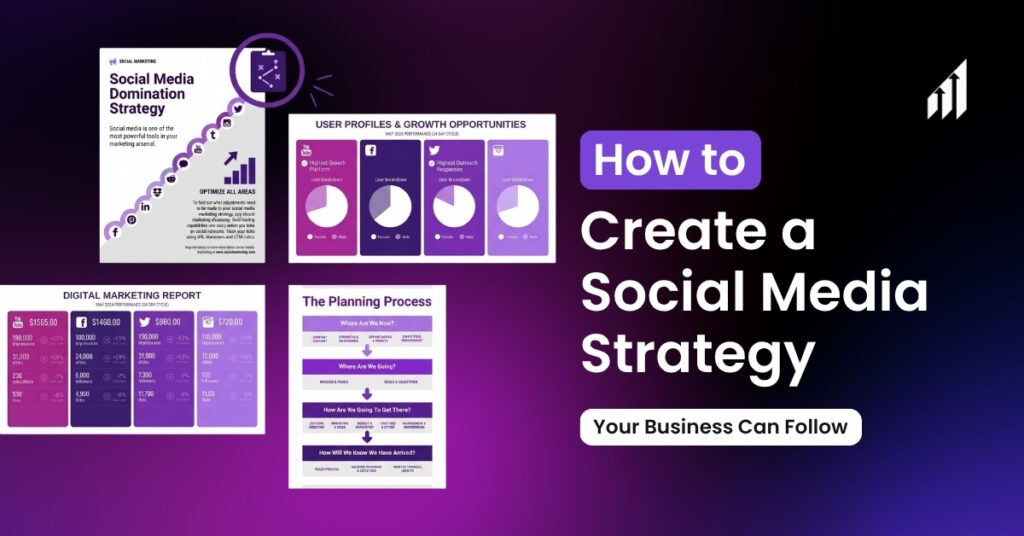
Social media looks easy until you are the one responsible for it. You post something, nothing happens, you post again a week later, still nothing, and eventually it just stops. Not because the platform does not work but because there was never a plan behind any of it.
A social media marketing strategy is what turns that cycle around. DigiEvolve social media marketing services include audience research, content planning, design, copywriting, scheduling, and performance tracking.
Knowing how to create a social media strategy turns random posting into a repeatable system that builds on itself over time. This article walks through how to build one from scratch, step by step, so your posting has direction and your time actually produces something. If social media has felt like a time drain rather than a growth tool, this is where that changes.
Lock Down Your Business Objectives First
Before you think about what to post or where to post it, you need to know what you are trying to accomplish. A social media strategy built around vague goals produces vague results. Businesses that see measurable growth from social media are the ones that connected their posting activity to trackable targets from the beginning.
Write Down Measurable Targets
Vague goals do not move anything. “More engagement” is not a goal. 150 website visitors per week from social traffic is a goal. 30 new leads a month is a goal. A 25 percent increase in online sales over the next two quarters is a goal. Once the number is written down, every content decision gets easier because you can ask whether it pushes toward that number or not.
Match Objectives to Business Priorities
A business that needs customers this month should not be building a brand awareness campaign. A business launching a new product should not be focused on growing newsletter subscribers. Your social media goals need to match what the business needs right now, not what sounds impressive in a report.
Research Who You Serve
You cannot write for an audience you do not know. The brands that build loyal followings are the ones that understand their customers well enough to say what those people are thinking.
Gather Information From Conversations
Skip the personal templates and go straight to the source. Read your customer reviews. Scroll through the messages and emails you have received. Talk to a few people who have bought from you. The words they use to describe their problems are the words your content should use back at them. That is what makes content feel like it was written for someone rather than at everyone.
How to Create a Social Media Strategy That Works?
Once you know your business objectives and understand who you are trying to reach, the next step is turning that information into a clear social media strategy. Knowing how to create a social media strategy means deciding what you will post, which platforms deserve your attention, how often you will publish, and how you will measure whether your efforts are moving you toward your goals.
Start by connecting your audience research and business objectives to a practical content plan. Every topic, format, and posting decision should have a reason behind it. Focus on the platforms where your audience is most likely to interact with your business rather than attempting to be active everyplace. From there, establish content themes, choose a realistic posting frequency, and create a system for reviewing performance.
The goal is not to create a complicated plan that takes more time to manage than the social media itself. A strong strategy should give you enough structure to stay consistent while leaving room to adjust when your audience or results tell you something different.
Map Out Content Themes
A feed with no direction reads like a company that does not know what it stands for. Picking a set of content themes and rotating through them consistently gives your audience something to expect from you.
Choose Core Topics
Three to four topics are enough. A financial advisor could anchor their content around retirement planning, tax strategy, investment basics, and wealth protection. A recruitment firm might post about hiring, workplace culture, salary trends, and candidate tips. The themes should sit at the intersection of what you know and what your audience wants to understand better.
Maintain Topic Rotation
Sticking to themes does not mean posting the same thing on a loop. Rotating through them keeps the feed varied while staying focused. Four themes mean your audience sees a complete picture of your expertise rather than one angle repeated endlessly.
Balance Educational and Promotional Posts
A good rule of thumb is 80 percent value and 20 percent promotion. Most people do not follow brand accounts to be sold to. They follow accounts that teach them something or make their job easier. Earn that attention first, and the promotional posts will work better.
Create a Posting Calendar
Accounts that grow have one thing in common: they show up consistently. A calendar takes the daily guesswork out of posting and keeps the habit from falling apart when things get busy.
Determine Realistic Frequency
Start with what you can genuinely sustain. Posting three times a week without fail will outperform a daily schedule that collapses after two weeks. Set a pace that fits your current capacity and build from there.
Block Time for Creation
Trying to come up with content on the fly every day is exhausting. Block a few hours once a week to create in batches. Write several captions at once, design the graphics for the week, or film a few short videos back to back. Working in batches is faster and produces better output than scrambling each time a post is due.
Use Scheduling Software
Tools like Buffer and Later let you load everything in one sitting and walk away. The posts go out on schedule without you touching your phone. Your content stays consistent even when the week gets hectic.
Analyze Competitor Approaches
Other businesses in your space are testing content on your shared audience daily. Watching what they do well and where they fall short gives you useful information without spending anything.
Review Similar Business Accounts
Pull up five accounts in your industry. Look at what formats they use, how often they post, and which content seems to generate the most response. You are not looking for what to copy. You are analyzing the playing field.
Identify Untapped Opportunities
If everyone in your space is posting static images but nobody is using video, that is an opening. If competitors talk about products constantly but nobody shares the people behind the business, that gap is yours to fill. Finding what everyone ignores is often more valuable than competing on the same ground.
Adapt Successful Concepts
A format that works for a competitor can work for you too, as long as the content itself is yours. If educational carousel posts are getting engagement, build your own around your expertise. The idea of the format is not owned by anyone. What goes inside it is.
Track Performance Metrics
Running a social media marketing strategy without tracking results is just posting with extra steps. The numbers tell you whether what you are doing is working, and they are the only honest answer to that question.
Monitor Relevant Metrics
The numbers that matter depend on your goal. If you are after leads, track link clicks and messages. If sales are the priority, follow conversions. If you want reach, watch impressions. Trying to track everything at once gets noisy fast. Pick two or three metrics tied to your objective and check those on a regular schedule.
Review Data Monthly
Monthly reviews give you enough to work with. You can see which posts connected, which ones fell off, and when your audience tends to be online. Instagram, Facebook, and LinkedIn all have built-in analytics that cover this without needing paid tools.
Refine Based on Results
A strategy that never changes is a strategy that slowly stops working. The goal is to keep learning from what the data shows and adjusting based on that.
Test Different Approaches
Change one variable at a time. Try a different format for two weeks. Post at a different time for a month. Test a shorter caption against a longer one. Small changes tested consistently will show you things no article ever could about your own audience.
Stay Updated With Platform Changes
Algorithms shift. New features get pushed. What earned good distribution six months ago might not today. Keeping an eye on platform updates and adapting when something meaningful changes is part of keeping the strategy current.
Double Down on What Works
Once you find content your audience consistently responds to, put more of your time there. If video outperforms everything else, make more video. If morning posts consistently beat afternoon ones, move your schedule earlier. The data is already telling you what to do. The job is to listen to it.
What Happens Without Direction
Irregular posting builds nothing. No momentum, no loyalty, no trust. The effort goes in and nothing compounds because there is no system holding it together.
A strategy changes that. Each post builds on the last. The audience grows steadily because the content is consistent and purposeful. Social media stops being a task you dread and starts being a channel that produces something.
Partner With Professionals
Doing this well takes time that most business owners do not have sitting around. Strategy, creation, scheduling, tracking, and adjusting every month is a full workload on its own.
DigiEvolve is a digital marketing agency that handles the whole system for businesses.
If you want to know how to create a social media strategy built around your goals and your customers, DigiEvolve builds that with you, starting from where your business is now and working toward where you want it to go.